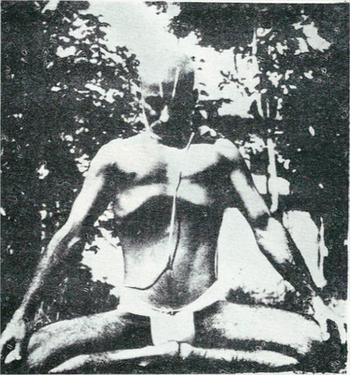

In almost every yoga class, there will be a point at which the teacher mentions bandha. Some might explain, some might not. It’s a mysterious word with a highly elusive and puzzling definition – body lock/contraction. Although this seems scientific and tangible enough, it’s actually quite hard to locate and manipulate your so-called ‘bandhas’.
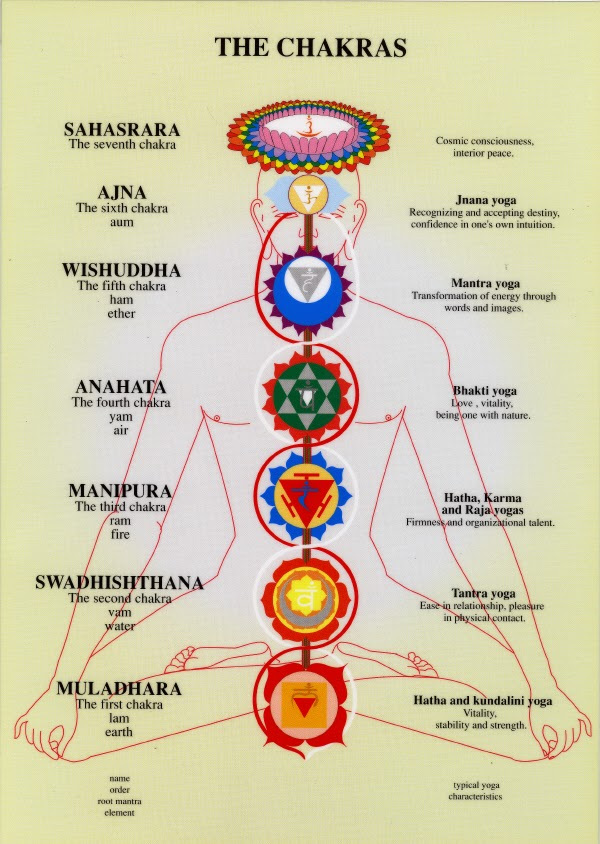
The bandhas are closely related to the chakras and are complementary. The main bandhas are throat (jalandhara), solar plexus (uddiyana) and pelvis (mula). Bandhas enable a deeper form of meditation
As some of you will know, the lower you go in the body, the more accessible the bandha. For the beginner, the higher bandhas will be like attic windows that haven’t been opened for so long they have stiffened and rusted shut. Other bandhas will be like the safe in the basement you didn’t even know about, let alone unlock.
In my own practice I focus on de-rusting and opening and closing the windows, letting in fresh air when the weather’s good and closing them to keep the heat in when storms are blowing outside.
Without bandhas, yoga becomes no different from stretching and exercising. Of course, that’s fine and good, but why not go the extra step and stretch and tone your inner body as well as the surface? Bandhas enable you to do this and their effect is pwerful: enhancing your mental and physical stamina as well as releasing toxins and disease. If you don’t believe me, there’s plenty to read on this subject and plenty of ways to try to connect with your bandhas.
Just locating them is a huge leap in physical and mental consciousness, and is a task in itself that took me a good few weeks of perseverance. Once you’ve done this, the logic behind the various asana poses suddenly makes a helluva lot more sense and, I’d say, increases your satisfaction in your practice by about 6/10, if you’d been at 4.
Now, if you learn to open and close just one bandha: do the one that sits at the base of the spine. This, the Mula bandha, is like the living room window in your house. You will shed and spread light, not just on your lower spine, but on your entire being.
Every asana in yoga has a correlating bandha/set of bandhas. Just to know this and be aware of this is a great start and a great motivator. To stimulate the bandhas I believe the first step starts with understanding – being able to picture them, starting with one and moving through to the more hard to reach ones. It might be that you work in metaphors and find them easier to fathom if you compare them to windows and safes belonging to the your body- a house. Or maybe you prefer something more literal, like a valve in some intricate network. Whatever you need, start to explore what they are, how they work and, even when you are standing on the bus or experiencing a tough situation at work, remember they are there and can be your secret weapon.
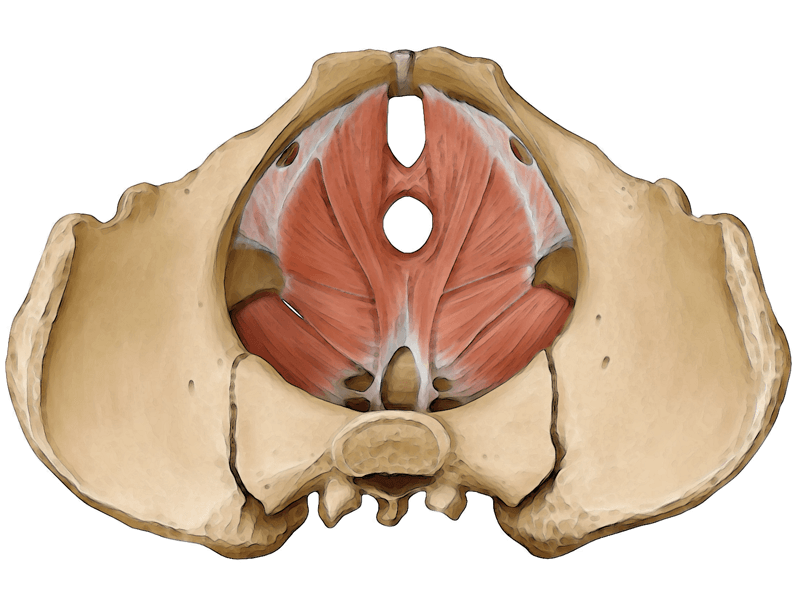
Above you see the pelvis and the fantastic piece of evolved engineering that is the many-layered pelvic floor. The muscle and fascia at the midpoint of this core form what’s known as the mula bandha. When it’s closed, it should feel like your are squeezing the area between your buttocks like an orange. Somehow, this movement makes you lengthen your entire spine, pull up your neck, roll out any shoulder curvature and make your feet and hands start to zing with all that lovely zing juice. If this isn’t what happens, don’t worry, just know that the valve is there and is probably working already, without you noticing, just observe it and notice how it might feel different in different situations. It’s the seat of your sexual and instinctive energy, so will probably have a mind of its own that kicks in when your logical brain isn’t too dominant.
 RoseYoga